RidMi-Peter

The Icons of the 3rd Industrial Rev...

Under the title 'De revolutie in de maakindustrie' I had the pleasure to open an afternoon packed with experts from that very revolution: Enrico Dini,...

My 3D Printed Yoda Bust

Personal 3D Printing

Today's issue of 'The Next Wave of Manufacturing' is all about how hobbyist 3D printers are not living up to their promise ... or is it? Kiet Calli...

WomanFactory1940s

The Next Wave of Manufacturing

2012 has literally been the year of all sorts of New Industrial Revolution prophecies. Jeremy Rifkin has popularized his idea of the Third Industrial ...

cheatsheet

Open Source Design: Disruption, Des...

At the Swiss Design Network Conference in Lugano, I gave this keynote on the impact of the 3rd industrial revolution on design. In this keynote I try ...

Academia

Unconferencing as method … New Paper Published

In 2008 I had the chance to design and run a 24-hour creative marathon for ETH Zurich (for details and credits see here). The over 100 parti...

Blog

As A Service

X as a service (XaaS) has been booming in software—but not only. Rolls Royce aircraft engines are av...

The FabLab Reference List, 2.0

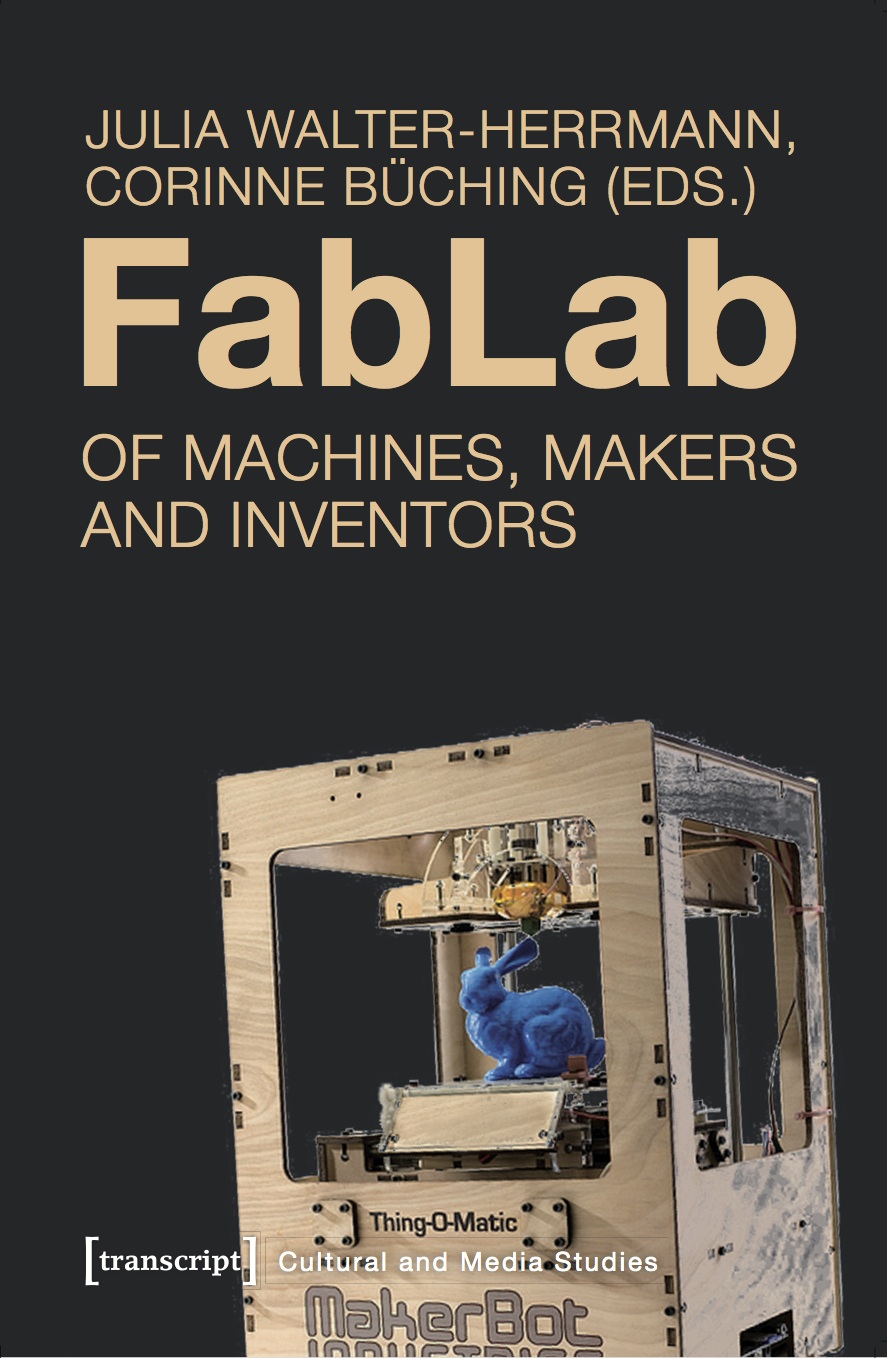
FabLab. Of Machines, Makers and Inventors.

FabLab. Of Machines, Makers and Inventors

The “Starting a FabLab Reference List” post has been mildly popular the past few years, time to write an update. Most noble excuse is that the book “FabLab. Of Machines, Makers and Inventors” is finally available to order from the publisher. It is a good source of more recent insights into FabLabs. A few chapters can also be found online:

That does not make the rest of the list irrelevant:


What’s Next for Open Hardware and Design?

Peter Troxler and Tomas Diez (left) on Open Hardware and Design

Peter Troxler and Tomas Diez (left) on Open Hardware and Design

The Open Book is not the proceedings from the Open Knowledge Festival 2012 but some kind of post festum reflection. It contains “contributions from a variety of thought leaders” (http://www.finnish-institute.org.uk/en/articles/57-reaktio-3) on various Open X topics: Open Data, Education, Software, … and Hardware. It’s available as a pdf from the above link since late february.

My contribution discusses “What’s Next for Open Hardware and Design”.

The Icons of the 3rd Industrial Revolution

Under the title ‘De revolutie in de maakindustrie’ I had the pleasure to open an afternoon packed with experts from that very revolution: Enrico Dini, italian architect and ‘the man who prints houses’, and Thomas Bossuyt who works as a sales engineer with LayerWise (the guys who printed that spring for positioning a telescope … and a first jaw implant).

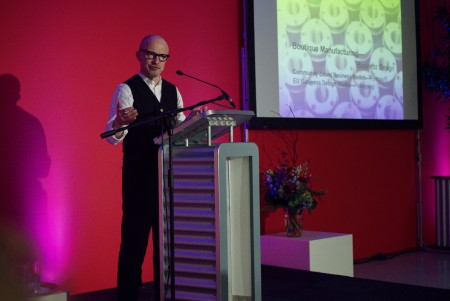
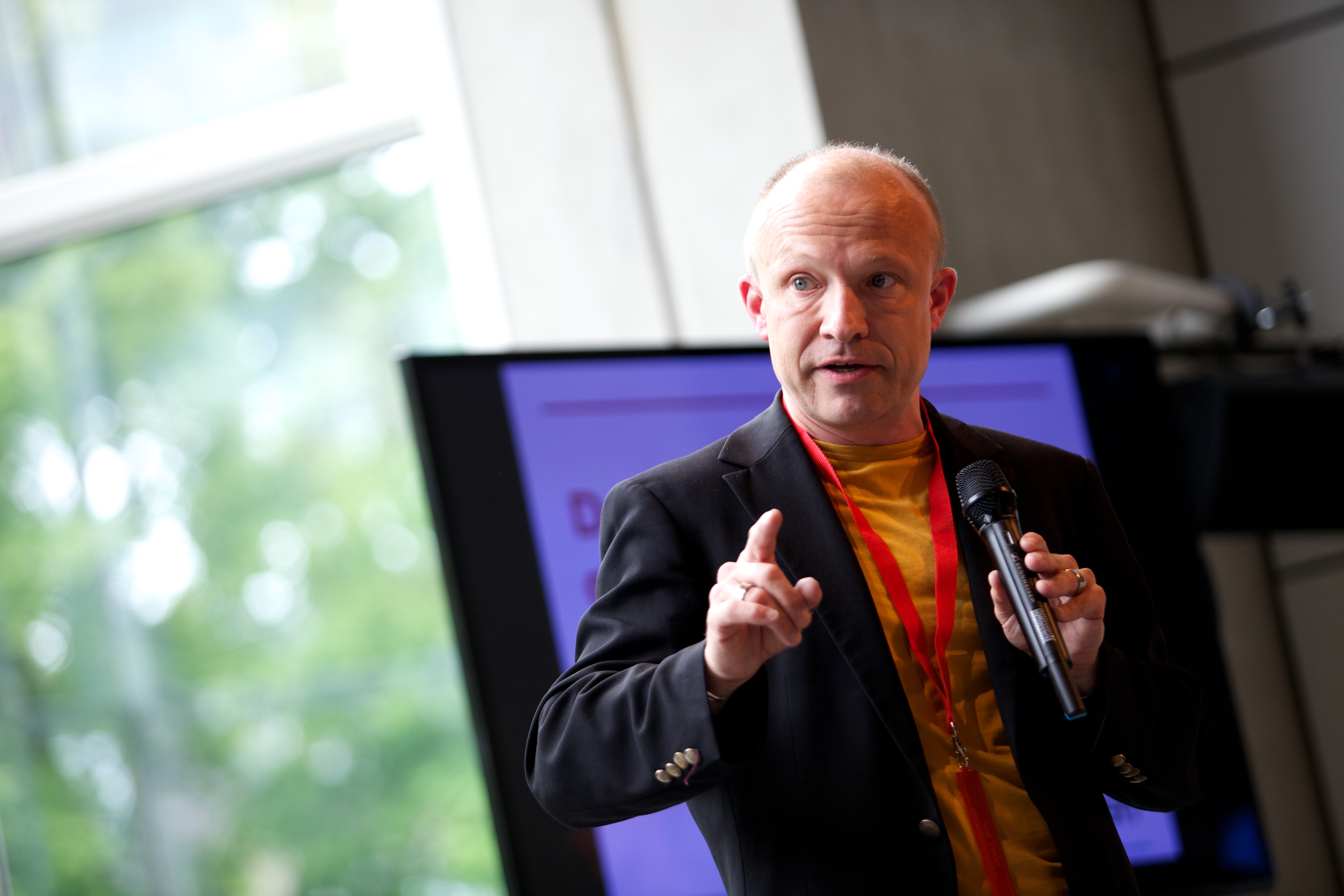
Peter Troxler at ‘De revolutie in de maakindustrie’, RDM Campus, 21st February 2013. Photo: RDM Campus

I had the task to introduce that revolution in manufacturing which is indeed the 3rd Industrial Revolution, and the 3D-printer is its icon machine—as were the steam engine for the 1st and the conveyor belt for the 2nd industrial revolution.

My presentation was certainly a follow-up on earlier versions, such as the one I gave to an equally attentive audience at the MakLab in Glasgow the week before.

The discussion in Glasgow actually triggered me to add a few more illustrations of what the 3rd Industrial Revolution means.

I already used the the icon machine and the icon actor imagery—this time round I expanded the list to include social and urban developments, means of transport and aspects of the supply chain … probably more to come.

And here is the Glasgow presentation:


Personal 3D Printing

This entry is part 2 of 2 in the seriesMIT: New Wave of Manufacturing

Today’s issue of ‘The Next Wave of Manufacturing’ is all about how hobbyist 3D printers are not living up to their promise … or is it?

My 3D Printed Yoda Bust
Kiet Callies / Foter / CC BY-NC

It is not a surprise that currently available hobby 3D-printers are a bit ‘finicky’, as Jessica Leber describes the printing process. I could not agree more, having seen people finicking around with 3D printers — a lot. But then, let’s be honest: extrusion technology has been around for twenty years (the initial Fused Deposit Modelling patent is from 1992). DIY 3D printers became available only in 2007 … and five years on they are sometimes ‘acting finicky’, but there are over 15 different models available (Make magazine reviews only 15).

I don’t follow Jessica Leber’s assertion that the objects a (hobby) 3D printer can produce are ’fairly crude but quite small’ — 50 microns resolution is not crude, and 9 by 9 by 9 inch (22 by 22 by 22 cm) is not exactly small.

Jessica is right in pointing out that the materials still are a serious problem (not only in the hobbyist world). This is a general issue, not only a problem with thermoplastics, by the way.

The conclusion that ‘[t]he constraints of the at-home technology explain why the latest shift in consumer 3-D printing is toward centralized facilities not unlike photocopy shops’ is wrong in two ways. First, 3D printing shops like Shapeways, iMaterialize and local round-the-corner facilities (from 3D model in Zurich to Deezmaker in Pasadena, from 3D-U in Madrid to the figurine shop ‘omote 3D’ in Japan) have been around for as long as hobby 3D printers (Shapeways was founded in 2007—note the coïncidence to the first RepRap). Second, it is not exactly a surprise that new digital production technologies are popularized via ‘for rent’ or service facilities: copy shops, for rent digital audio studios and video cutting suites were the predecessors of home colour printers, Garageband, iMovie and the likes.

The big surprise in the article—or the big disappointment—is that Jessica Leber in no way questions where the digital models for printing would be coming from. THey are downloaded from the Internet, apparently. The article portrays home 3D printing as a consumption activity. I doubt it is. If Jessica Leber would have looked at Thingiverse (the one platform really devoted to a 3D printing community, not like Instructables that recently has been bought by a Autodesk, a (3D) modeling application developer) she would have noticed: 2112 things in household, 1616 things in art, 1476 things in hobby, 1097 things in toys, 644 things in fashion, 349 things in learning, …

I also would have expected that an article from MIT Technology Review would at least raise if not address the question how hobby 3D printing relates to ‘professional’ 3D printing—at least as a reference to what they published a few days ago (The Difference Between Makers and Manufacturers). Also that article only asked ‘can the maker movement really produce more than iPhone covers and jewelry’ and never asked ‘what can the real manufacturers learn from the makers’ or even ‘where could manufacturing go if it embraced making’ and ‘where could making go if it embraced manufacturing’.

Those are the relevant questions that lead to the future—not an MIT-instigated artificial war on the old-fashioned amateur vs. professional fronts. You’d better listen to Charles Leadebeater…

The Next Wave of Manufacturing

This entry is part 1 of 2 in the seriesMIT: New Wave of Manufacturing

2012 has literally been the year of all sorts of New Industrial Revolution prophecies. Jeremy Rifkin has popularized his idea of the Third Industrial Revolution and the shift to lateral power at the ‘Mission Growth’ conference in Brussels. Chris Anderson has written about the maker movement and how this would would be the New Industrial Revolution. Peter Marsh has written about the fifth revolution in The New Industrial Revolution: Consumers, Globalization and the End of Mass Production. Even myself, I have become research professor on the revolution in manufacturing.

WomanFactory1940s
Hollem, Howard R / Foter / Public domain

MIT’s Technology Review has started a new series on the Next Wave of Manufacturing. I’ll be re-blogging this series here, trying to give it a European perspective.

The first two editions were on the topic of technology (3 Jan) and machines (4 Jan). The technology piece argues, that manufacturing needs to be close to development, because “[w]ithout understanding the details of production, you can’t really design the most competitive products”. Hear hear! one is tempted to say. Integrated product development and concurrent engineering come to mind, principles we’ve been taught as crucial to modern manufacturing back in the 1990s: designing manufacturing and product support processes together with the design of the product. They have been embraced by the space industry, and the automotive industry. The disappearing wage differences between China and Mexico and the risk natural disasters pose to global supply chains (the article cites the Japan earth quake and tsunami in 2011 as an example) only give more weight to this argument. So the question really is ‘[i]f labor is not the differentiating factor, you need to ask, “What can be?”‘. If the answer is manufacturing technology then there are two factors that limit an economy’s ability to actually make use of that technology: one is the cost of capital investment to buy the technology, and the other is the availability of technology-savvy personnel to operate and maintain it.

Consequently, economist Ricardo Hausmann argues, that the US would need to become a big producer of the machinery of the next wave of manufacturing and do something about the knowledge export: ‘the retention of the high-skilled people who come here to study and then don’t stay’. The really interesting information in this interview, however, is the link to the Atlas of Economic Complexity. In a nutshell, this atlas ‘measures’ the variety and interconnection of knowledge available in a country by studying imports and exports of products. Goods like ‘medical imaging devices or jet engines, embed large amounts of knowledge and are the results of very large networks of people and organizations’, they are produced by complex economies. Simpler goods like wood logs, coffee, cheese or tulips ‘embed much less knowledge, and the networks required to support these operations do not need to be as large’, the economies producing them are less complex. In the complexity ranking of the atlas, Japan, Germany and Switzerland have been the three most complex economies for decades; the US is currently (2008 data) number 13, the Netherlands number 23, Mexico is number 20, India is 51, Brazil is 52. Last on the list are Papua New Guinea, Congo, Angola, Sudan and Mauritania. I feel I’ll have to spend some time with this atlas…

Further topics of the series on the Next Wave of Manufacturing will cover:

  • 3-D printing
  • Energy requirements and resources
  • Robots and mergers and acquisitions
  • The political debate
  • Q&A with Carl Bass (president and CEO of Autodesk)
  • The military perspective
  • Made in America
  • New materials
  • More of Made in America
  • The impact of the Internet
  • New disciplines and their manufacturing requirements

As A Service

X as a service (XaaS) has been booming in software—but not only. Rolls Royce aircraft engines are available as a service since 1989 (http://rrpf.rolls-royce.com/RRPF/); car leasing (and in fact leasing of industrial equipment) is a normality. But imagine for a second every thing would be turned into a service … what would happen?

I think:

  • Technology will decrease in cost.
  • Service will cost the same or even increase in price.
In other words: service providers will be able to keep the difference.  That’s probably the reason, why XaaS has a good chance to get credits from banks these days.

Open Source Design: Disruption, Desire, Destiny?

At the Swiss Design Network Conference in Lugano, I gave this keynote on the impact of the 3rd industrial revolution on design. In this keynote I try two things: to relate open design to the wider context of these similar developments which in the view of Jeremy Rifkin constitute the ingredients for a new industrial revolution, and to reflect upon the consequences of open source design for the design professions: Will open design disrupt current design practice and destroy design business? Or to the contrary—should designers desire to turn to open source a.s.a.p.? Or is open design just unavoidable, part and parcel of any designer’s destiny?

Find the paper attached Troxler, Peter (2012). Open Source Design: Disruption, Desire, Destiny? On the Impact of the 3rd Industrial Revolution on Design. Keynote at the 8th Swiss Design Network Conference, Lugano, 9 November 2012.

Lecture @ Digital Sustainability in the Knowledge Society

Today I gave a short lecture in Marcus M. Dapp’s course “Digital Sustainability in the Knowledge Society” at ETH, Zurich. Essentially I was trying to convey the basic ideas of open source hardware and how this development is tied to the notion of the Third Industrial Revolution (according to Jeremy Rifkin).

As it happens, time was short and material was plentiful, so instead of a transcript of what I actually did present I’d rather give the whole corpus here:

  • The Making Revolution


  • The Third Industrial Revolution


Why Hardware is different to Software: «Hardware is Hard»

Troxler, Peter (2011). Libraries of the Peer-Production Era. In Abel, Bas van et al. (eds.) Open Design Now, p. 89)

It would be naïve to believe that open source software practices could be simply copied and applied to the manufacturing domain without any alteration or adaptation, ignoring the constraints and opportunities that the materiality of hardware entails.

Linux is subversive.

Eric Steven Raymond: The Cathedral and the Bazaar (2000)

Linus Torvalds’s style of development—release early and often, delegate everything you can, be open to the point of promiscuity—came as a surprise.

cathedral … carefully crafted by individual wizards or small bands of mages working in splendid isolation

a great babbling bazaar of differing agendas and approaches (…) out of which a coherent and stable system could seemingly emerge only by a succession of miracles

First, there is inherent openness—hardware can be pretty self-explanatory about its composition. To keep that openness intact the challenge lies in defeating the novelty requirement of related patent application or design registrations by open design techniques.
Second, breaking up complex systems into simpler modules is not as common in hardware design as in software—despite being promoted as good design practice. Combining modules is potentially more complex as in software as physical forces, mechanical fit and design considerations will have to be taken into account.
Third, there are materials involved that may come at a cost and manufacturing processes that may not easily be accessed or require specialist tooling. Different strategies can be employed to overcome such barriers, such as using industrial side-products as raw materials, pooling manufacturing resources or using more universal fabricators.
Fourth, the term hardware spans a much broader field than software and includes such far apart things as integrated circuits, home furniture and ship-to-shore container cranes. The different branches of hardware vary according to materials and technologies involved, manufacturing tools and processes, documentation customs and standards, etc., and the above mentioned characteristics may apply to a different extent.

Movies I included in the presentation:

And of course I referred (very briefly) to the legal issues, the long presentation is here:


Open Knowledge Festival – Helsinki, 18-22 September 2012

Open Knowledge Festival by meowtreeThere is another Open Knowledge event coming up — 18-22 September 2012 in Helsinki — and I’m a proud member of the advisory board and guest programme planner for a stream on Open Design / Hardware / Manufacturing & Making.

This stream covers Open Design in all its various facets (from design as a blueprint to design as process to design as an artefact) and applications (product design, graphic design, fashion design, service design, interior design, architecture, hardware …). Topics such as Open Hardware, Open Fabrication and Manufacturing, and Making in general are also covered by this stream.

The Open Design / Hardware / Manufacturing stream will showcase contemporary research and practice in this emerging field and address some of the greatest challenges in the area.

The four-day stream will bring together researchers and practitioners interested in open design, hardware and manufacturing under the auspices of the Open Knowledge Foundation’s “Open Design Working Group”.

The stream will include keynotes, presentations, panels and discussion, practical hands-on activities and topic-focused workshops, and an exhibition with open design / hardware / manufacturing artefacts.

We call for 500 word abstracts for contributions, accompanied by 1 visual element if appropriate.

Submissions are sought on (but not limited to) these topics
Practices of sharing designs and design experience
Practices of designing collaboratively/collectively
Codifying skills / methods / processes / products
Legal frameworks for open design / hardware / manufacturing
Structural elements/modules of a global making infrastructure
The design / hardware / manufacturing Commons
Creating and sustaining local communities in a global environment
New ecosystems of fabrication (Maker movement, Manufacturing 2.0, third industrial revolution, etc.)
Impact of open knowledge on industry
Open design / hardware / manufacturing and education
Women in open design / hardware / manufacturing

Types of contributions
Products and exhibits (we want to have an open design / hardware / manufacturing exhibition)
Hands-on workshops (as part of the stream we wish to offer a series of half-day opportunities to actually make stuff)
Analytical contributions (think of talks and presentations)
Opinions (we could imagine to have some controversial discussions once a day)
Working groups (we have some break out rooms for smaller groups to work on a question or topic)

Submission deadline is June 1st, 2012, notification of acceptance: June 20th, 2012.

Open Design Now

Open Design Now, cover by Hendrik Jan GrievinkMy most recent book is “Open Design Now”, edited by Bas van Abel, Lukas Evers, Roel Klaassen and myself. The book is available from BIS publishers http://www.bispublishers.nl/bookpage.php?id=190

Content will gradually be made available at http://opendesignnow.org/; my contributions are:

Open Design Now is a collaborative effort of Creative Commons Netherlands, Premsela, Dutch Platform for Design and Fashion and Waag Society.